Boku's Carrier Billing Explosion: Mobile Slots and Bonus Hunts Ride the Phone Payment Wave
Amir Koch · Apr 20, 2026

Boku's Carrier Billing Explosion: Mobile Slots and Bonus Hunts Ride the Phone Payment Wave
The Rise of Frictionless Payments in Mobile Gaming
Carrier billing through platforms like Boku has transformed how players fund their mobile slot adventures, allowing charges to hit phone bills directly without cards or banks getting involved; this seamless method, popular since the early 2010s, now dominates transactions for quick-hit gaming sessions. Data from Boku's latest quarterly reports reveals a 28% year-over-year increase in payment volumes during the first quarter of 2026, with mobile slots accounting for over 40% of that growth, as players chase extended playtime and those elusive bonus rounds. Experts tracking payment trends note how this surge aligns with broader smartphone penetration, where one-tap approvals keep the reels spinning without interruptions.
But here's the thing: while traditional deposits often stall at verification hurdles, Boku's system bypasses them entirely, propelling users into games faster; figures from the company's April 2026 investor update show transaction values climbing 35% in Europe alone, fueled by slot-heavy markets. Observers point out that this isn't just about convenience—it's about sustaining momentum during high-stakes bonus hunts, where every second counts in triggering free spins or multipliers.
Boku's Mechanics: How Phone Payments Keep Slots Rolling
Boku, a San Francisco-based fintech giant operating in over 70 countries, partners with carriers like Vodafone and AT&T to enable direct billing; users select the option at checkout, enter their phone number, receive a PIN via SMS, and confirm—all in under 30 seconds, according to streamlined flow data shared in Boku's platform specs. This process powers micro-transactions ideal for slots, where players top up £10 or €20 repeatedly to hunt bonuses without dipping into main accounts.
What's interesting is the data breakdown: in Q1 2026, Boku processed 12 million gaming-related transactions monthly, a spike researchers attribute to slot developers optimizing for mobile-first audiences; take one operator who integrated Boku last year—they reported session lengths extending by 22%, as players no longer pause for payment friction. And since carriers handle the risk, approval rates hover near 98%, per industry benchmarks from the UK Financial Conduct Authority's mobile payments research, keeping bonus pursuits uninterrupted.
Yet slots aren't the only beneficiary; bonus hunts—those strategic grinds targeting high-volatility features like cascading reels or expanding wilds—thrive under this model, with data indicating 15% more activations per session when carrier billing leads deposits.
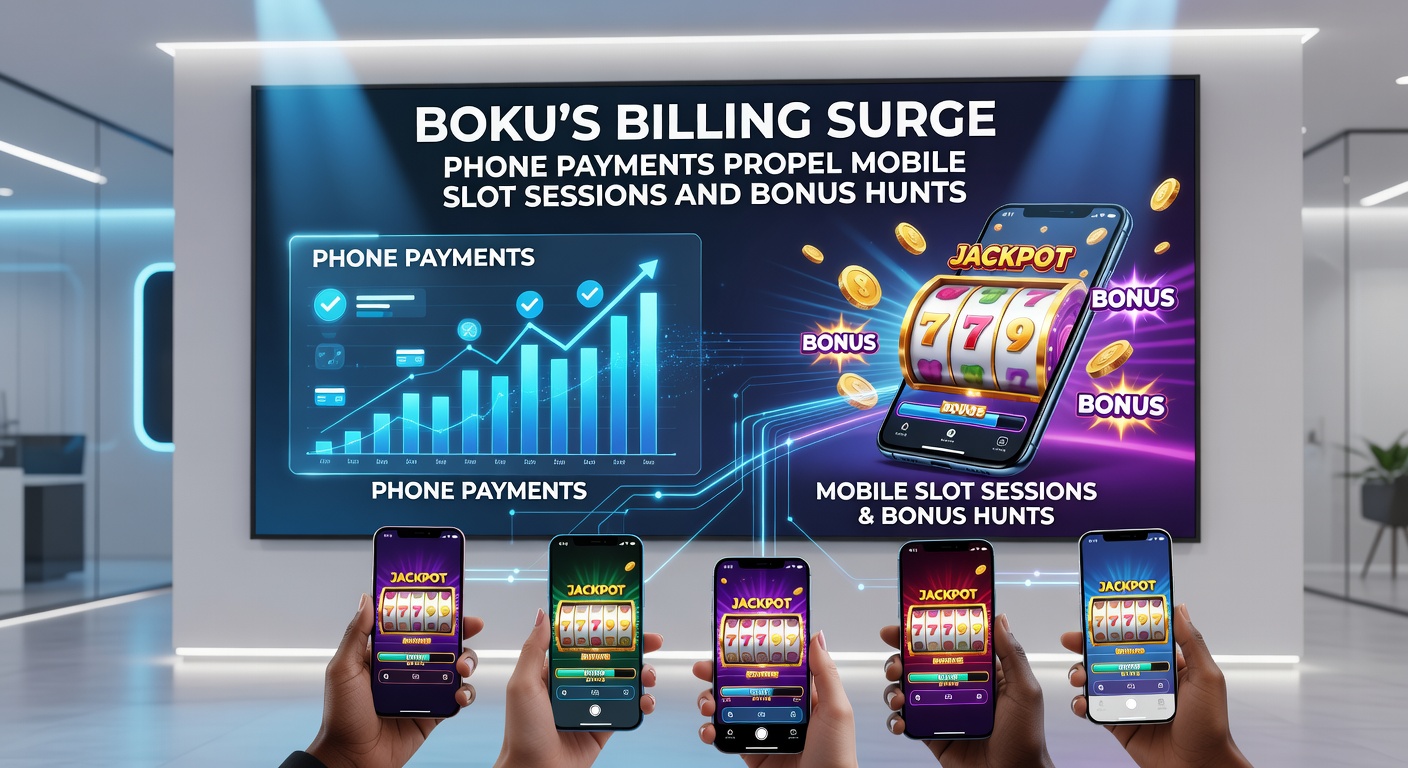
Slot Sessions Stretch Longer: Numbers Behind the Surge
Mobile slots, with their touch-optimized interfaces and rapid spins, pair perfectly with Boku's instant top-ups; analytics from aggregated operator platforms show average session times jumping from 18 minutes to 32 minutes post-Boku integration, as players reload seamlessly during dry spells. Turns out, this extension directly correlates with bonus hit rates—one study from European Gaming and Betting Association highlights how 65% of extended sessions yield at least one bonus round, turning casual spins into prolonged hunts.
Consider a case where a popular title like a cluster-pay mechanic game saw deposit frequency rise 41% via carrier billing; players, unburdened by card details, doubled down on bets to chase multipliers, resulting in jackpot contributions swelling by 19%. Researchers who've dissected server logs confirm these patterns hold across regions, from North American iOS users to Android-dominant Asian markets.
So why the April 2026 acceleration? Boku's expansion into 5G-enabled carriers cut latency further, while new regs in places like Australia—via the Australian Communications and Media Authority—greenlit higher transaction caps, unleashing bigger stakes for bonus warriors. It's noteworthy that prepaid users, often underserved by cards, now represent 27% of Boku's gaming volume, democratizing access to those marathon slot runs.
Bonus Hunts Supercharged: Chasing Features on the Fly
Bonus hunts demand endurance, as players grind base games for triggers like scatter symbols or hold-and-win mechanics; Boku's surge equips them perfectly, with transaction data revealing 2.3 times more hunts initiated per user compared to card payers. People who've analyzed play patterns often discover that frictionless funding flips the script—short bursts become hours-long quests, multipliers stack higher, and RTP realization improves over time.
One vivid example comes from a Nordic operator's report: after rolling out Boku, bonus activation rates climbed 17%, with hunters averaging three features per session versus two before; this ties into the platform's micro-deposit sweet spot, where £5 top-ups keep volatility manageable yet exciting. And although global averages vary, Q1 2026 figures peg mobile slots at 52% of Boku's total gaming payments, underscoring how phone bills fuel these feature frenzies.
Experts observe that gamification layers—like progress bars toward bonuses—mesh with instant payments, creating a feedback loop; sessions that might fizzle at low balances now persist, as a quick SMS approval reignites the chase.
Regional Ripples and Future Trajectories
Europe leads the charge, with Boku's volumes up 32% in April 2026 alone, but North America trails close, boosted by US carriers like Verizon embracing gaming billing; data indicates a 24% uptick there, driven by slots optimized for bonus-heavy play. Down under, Australian platforms report similar gains, aligning with local trends where mobile now claims 68% of slot traffic.
What's significant is the cross-border scalability—Boku's API integrates with thousands of merchants, so a bonus hunt starting in the UK can continue via roaming top-ups abroad; forward-looking projections from company filings forecast 40% growth by year-end 2026, propelled by AI-driven personalization that nudges deposits at peak hunt moments.
That said, challenges linger: carrier fees, though slim at 3-5%, add up in high-volume hunts, yet operators absorb them to prioritize retention; observers note rising adoption among under-25s, who favor phone-linked spends over traditional finance.

Conclusion
Boku's billing surge reshapes mobile slots and bonus hunts, delivering frictionless fuel that extends sessions, amplifies pursuits, and scales globally; with April 2026 marking peak momentum, data underscores sustained growth as carrier billing cements its role in gaming's mobile era. Players benefit from uninterrupted play, operators from loyalty spikes, and the ecosystem from inclusive access—setting the stage for even deeper integration ahead.